Friday, 5 April 2013

The anguish of Archery/Sport


Well it is now gone 9pm and I am back in the house with my girlfriend.  She has had a busy day doing the chores and garden. She has done everything, even ironed my shirt ready for work tomorrow. Without that support I wouldn’t be here on the computer.

For my day, well I can’t really say the same.  I shot below my average and the team came second.  Overall, I am pretty disappointed with my performance. It’s easy to beat yourself up over it and think it was you who let down the team.

For the top athletes it can sometimes feel like you have let the country down. I mean Rebecca Adlington was incredibly emotional after coming 3rd in the Olympics [1].

This is the flip side of sport.  All that effort and practice can amount to nothing.  It is so easy to say it is worth it with a medal around your neck.  But spare a thought for the people who put all the effort in and don’t make it or have careers cruelly cut short though illness and injury. 
These people rarely reach the headlines and if it does it is often tragic. Take Fabrice Muamba who collapsed during a football match on the 27th of March [2].

He has never played again and has had to change his lifestyle completely.

Yet for the rest of us we cannot dwell on these tragedies.  It is back to the training field to perfect my technique and in a fortnight’s time I will try again at another competition.  This time it will be worth it.

Hmm I wonder if my girlfriend will make me another cup of tea for the journey?

Good night. 

References
[1] http://www.bbc.co.uk/sport/0/olympics/19122451
[2]http://www.thesun.co.uk/sol/homepage/sport/football/4201593/Tottenham-v-Bolton-FA-Cup-tie-abandoned-after-Fabrice-Muamba-collapses.html 

For the love of Archery/Sport


A break from my normal posting time: it is roughly 5:30am and I am getting up to go for a shoot 60 miles away in another county.  My teammates are due any minute to give me a lift and my girlfriend has kindly made me a cup of tea for the journey.  (She has promptly gone back to bed and is sleeping peacefully)

It does make you think about why we put ourselves through this. The early mornings and long hours practicing, all for a tin medal round your neck- which you are never guaranteed to get.

It can be a tough question to answer but in reality we do because we love it.

We do it for the challenge, the team, the feeling of elation, and the knowledge you are pitting yourself against other competitors on a level playing field.  Athletes like Anya Shrubsole thrive on that challenge [1]


That is the essence of why you do sport. If you win or beat your target, the feeling that you were the best on that day is unassailable.  Nothing and no one can take that away from you.  That is why you keep coming back and putting those long hours in.

Sport has been compared to a drug as you keep going until you have had your fix and then repeat it to try and get the same fix.  I, for example, stopped shooting/coaching for 2 years but yet I came back and never felt better.  With all addictions though it can be disastrous and athletes find it hard to go cold turkey.[2]

I think I best go into that another day as my lift is here.  We are off to a school hall in the middle of a non-descript housing estate.  Glamorous it is not but this is where it begins

Links
[1]http://www.bbc.co.uk/sport/0/cricket/20936477
[photo] http://i.telegraph.co.uk/multimedia/archive/02476/Anya-Shrubsole_2476136b.jpg
[2]  http://www.bbc.co.uk/sport/0/20646102

Saturday, 23 February 2013

Subtle Variations in Technique


We have looked at the forces and a bit about technique so let us take a look at a couple of top archers. The video below show Celine Schobinger and Natalia Valeeva in the recent world championship in Nimes.

Be aware it is 15 min long, but you only really need to view it for a couple of minutes, oh and the commentary is in French aka nonexistent.


Their technique is pretty much identical even though they are from different countries. Their style could be argued as text book.  However there are very subtle variations, for example Celine is left handed and pulls the string to the side of his face compared to Natalia etc.  Now these archers are at their top of their game and neither one has a “better” technique.  The differences are very subtle but very important as it shows that no one archer/athlete is the same. 

So each archer has their own variation on the same technique.  Now others can be considered to have an unorthodox style. Michele Frangilli is the classic example in archery.


The way this guy shots is frankly incredible! He has literally taken the rule book eaten it, regurgitated and then read it.  How he got to this point I have no idea and, try as I might, I cannot find information about it; to even hope to give a reason. 

Although saying that this is not the first time an unorthodox style has proven itself; take Kevin Peterson reverse sweep for an example.  When he first performed this strike/style it was considered unorthodox and went against the usual thinking.

 
It some situations is has proven very effective, but yet still it is only he who does it in the world of cricket.

So would changing Michele Frangilli technique to text book approach improve his performance? Well why not? It has been biometrically proven [1]  that the best stance/style is that demonstrated in the first video. Surely it is therefore better?

Yet there is another train of thought: “if it aint broke don’t fix it”.  He is still a very successful archer and walked away with team gold at the London Olympics [2]

To change or not to change is a key question and requires serious trust dedication on the part of the athlete and coach to even think about attempting it.  As any change can adversely affect an athlete’s performance in the short term.  It can even affect their mental game.

Just think you have reached the UK squad, by performing your way, then asked to changed your style entirely just because it is deemed better. If this change works then, great. If it doesn't it can leave you feeling rejected.

It is very personal thing and it is no wonder when it a certain style doesn't work some of the replies can be very derogatory, particularly if people train elsewhere to try and reach their goal. “Just because I didn’t train with squad they didn’t even check on me” [3]

That is one for the courts to decide but change can reap success, it did for Hannah Miley when she gained weight and changed her sleep patterns to improve her performance.[4]

Not something any usual 23 would do. That is dedication and shows a serious love of her sport.

 Links
[1] http://www.archerygb.org/members/operations/coaches/coaching_videos.php
[2] http://www.bbc.co.uk/sport/0/olympics/18910374
[3] http://www.bbc.co.uk/blogs/olliewilliams/2012/06/emotion_and_anger_as_olympic_d.shtml
[4] http://www.bbc.co.uk/sport/0/swimming/20694179


Sunday, 27 January 2013

Physical Forces and Alignment.


Before we get into technique an understanding is required of what physical stress an Archer’s body is under.  The video below is a good overview of this (apologies for the exaggerated American commentary) 

Before we continue, yes it is not 74ft Brady is shooting and no I do not know how many donuts were harmed in the making of this film.
 
With the commentary aside it does give an indication of the physical forces and how archers use the human body, the skeleton structure in particular, to handle it.
 
As mentioned at point (0.38min) in the video by aligning bones in the front arm (the arm holding the bow) this allows the compression force from pulling the bow to be loaded on the bones with only minimal effort from the muscles. This is great for efficiency and means Brady can keep doing the same shot each time.
 
Now let us focus on the right arm or the pulling arm. In the video it comes back and the hand rest under Brady’s chin. The point where the hand and subsequently the string touch his face is known as the reference point. The bow is not drawn much further from this point so Brady is now at full draw.

Take a look picture (a) a photo from behind of Taylor Worth (I couldn’t find a picture of Brady from this angle) at full draw. Notice how the string lings up with elbow. Then look at picture (b) a face front picture of Brady. Now notice how the arrow is lined up directly with the elbow. 

                                                Picture (a)                                                                    
Picture (b)
What you are looking at in archery terms is the draw force line or put simply alignment.  This is a text book position at full draw. It is solid, the force is being held directly inline, perfect really.  We can surmise that the force of the bow is being held by the right arm/pulling arm, in reality this is not the case. Nearly all the work/force is being held on the back muscles.

From this video see how the back muscles are moving and working during the shot. The back muscles are what we want to use during shooting. They are strong and can take 56lb of force as related in the video.  (you might need to loop the video is 8 sec long)


What Brady does and other archers of his caliber do can be classed as text book technique. It is worth knowing that the application of this technique can differ. 

Bloggers Note
This post has just taken a brief (text book) review to handling the power of a bow and in the process touched on technique. Now there is much more about technique than what I have written. There are volumes dedicated to this subject matter. This a blog not a book so don't shoot me on the bits i have missed. 

Sunday, 16 December 2012

“Robust, repeatable, predictable, performance”


A “Robust, repeatable, predictable, performance”[5] effectively allows the archer to shoot every arrow perfectly, every time and in any conditions.

How to get there is a massive question and one which can be argued that there is no single answer.

People still look for a single answer and it is incredible what lengths teams go to get an edge, legitimately or otherwise to win.


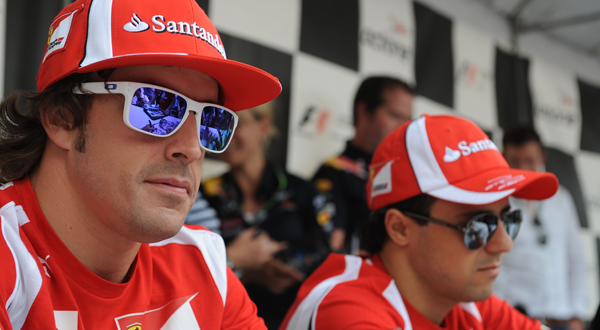
The Ferrari Team on the 18/11/2012 took the decision to tamper with their second driver’s car to take a penalty to enable their lead driver to gain places on the grid, this was a legitimate move[2] and was within the rules.  Was it “fair” and “sporting” possibly not, but that is not the aim of the game.  The aim of game is to win (a mind set which I will cover later on another post).
It was interesting that other major F1 teams understood Ferrari’s actions. Christian Holmer Redbull racing boss said "It's within the regulations; it's a tactical move"[3]

Now bring this single answer strategy to a sportsman’s performance issue and it seems everyone (including coaches) has a viewpoint and verdict.

You hear it on national television from sports pundits all the time.  If often goes like, sportsman/team “x” isn’t doing it right because they are not doing it like “famous sportsman/team y”.

This is not a dig at sports pundits as that is what they are employed to do.  But is it always the correct solution or the only answer to that sportsman/team’s performance issue? I feel that is unlikely.

So if there is no single answer. What is the answer? Is there an answer? Not sure.

Maybe the solution is unique to that individual. We are all different in terms of physiology, body shape and psychology.  We know in our lives that we all work differently.  Some are “morning people” others are night owls.

So if the solution varies for different sportsmen then does the process to get there differ? 

Yes it does but the overall aim is the same for any sportsman in any sport. To be the best and to have a “robust, repeatable, predictable performance”

Where does this put me? I have my goals I know a bit about what to do so I should just practice. Sound simple doesn’t it.

For some it is just that simple, and this is the standard form of practicing for a lot of sports clubs including archery. Heniz Reinkemeier sums it up in “On The Training of (Rifle) Shooters”

“99% of participants know only one way of practising. Each training session the count out the appropriate number of cards, plus sighter, blast off the required number of shots for a maximum score” [4]

There are some archery clubs/organisations which are exceptions to the above rule.

The concern for this style of practice is that it can ingrain bad habits and doesn’t fully cover all aspects of shooting.  Some of the aspects can be broadly put in the following categories. 

  • Technique.
  • Psychology.
  • Fitness.
  • Nutrition.

These are broad categories and are not an absolute list as that is largely determined by the strength and weaknesses of the archer. Once that is defined a training plan could be used to improve the archer/coach in areas of weakness and finally achieve a "robust, predictable, performance that we have 101% confidence in"[5]. 


References
[1] http://www.formula1blog.com/2012/11/18/is-massa-gearbox-the-right-move/
[2] http://www.independent.co.uk/sport/motor-racing/ferrari-gearbox-trick-to-aid-alonso-was-legal-says-fia-8329609.html
[3] http://www.bbc.co.uk/sport/0/formula1/20389331
[4] On The Training of Shooters Volume 1 ISBN 0 9521077 0 8 page 3 
[5]http://www.bbc.co.uk/blogs/annabelvernon/2012/07/the_work_is_done_time_for_nerv.html